Categories
English

Flatulence: everything you need to know about farting

Reading Time: 5 minutes

Flatulence or farting is a perfectly normal part of our lives.

Yet, farting is associated with a lot of embarrassment and discomfort 😳.

But it shouldn’t be this way, as deep shame often keeps people from seeking help for serious health issues, causing unnecessary suffering.

Thankfully, knowledge about the topic can reduce embarrassment!

Therefore, to make you feel more comfortable with this topic in the future, we will tell you everything you need to know about flatulence below.

What causes flatulence?

An average person produces roughly 2 litres of intestinal gas per day and passes gas about 14 to 20 times.

Gas collects in two ways:

  1. You swallow air during eating and drinking, which then travels to the intestines.

    The faster you drink and eat, the more air you swallow. Excessive air is later expelled through the mouth, i.e. by belching or burping, or through the rectum, i.e. by farting or passing gas.

    In addition, smoking, drinking through a straw, and chewing gum may also cause you to swallow more air than normal.

  2. Your gut bacteria break down food in the large intestine, creating gas.

    Undigested food passes from the small intestine to the large intestine where it is broken down by bacteria. As a result of this, gases such as oxygen, nitrogen, hydrogen, carbon dioxide, and methane are produced.

    Foods that cause excessive flatulence include carbohydrate- and polysaccharide-rich foods, such as beans, cabbage, whole-grain foods, fruits and vegetables.

What is the difference between flatulence and bloating?

In everyday language, the words “bloating” and “flatulence” are often used interchangeably, although, in reality, they refer to two different symptoms.

Bloating refers to pain, discomfort and a sense of fullness in the upper abdomen (area above the belly button and below the rib cage).

Bloating is caused by hormones, stress or inflammation in the upper intestines.

Flatulence, on the other hand, refers to excess gas in the lower abdomen (below the belly button) that stretches the intestines as it travels, resulting in sharp, stabbing pain.

Unpassed gas may cause bloating, but not vice versa.

Why do farts smell bad?

Interestingly, only about 1% of all farts actually smell bad.

Smelly farts can be blamed on gut bacteria that produce sulphur-containing compounds when breaking down food.

In addition, several other factors also contribute to foul-smelling flatulence:

  • Slow-digesting and non-digesting fibre-rich foods.

    These kinds of foods take a long time to digest and since they stay in the intestines for a significant amount of time, they eventually start to ferment, causing the bad smell.

    Many plant-based foods also contain sulphur which contributes to the distinctive and pungent smell profile.

    What to do?

    Did you eagerly start eating large amounts of fibre and plant-based foods and your stomach can’t handle digesting them all at once?

    In such a case, a simple reduction in portions should help, after which you can slowly start increasing the portions again week by week.

  • Food intolerances.

    Smelly gas is also produced if you are hypersensitive to certain types of food or if your stomach cannot digest that type of food at all.

    For example, in the case of lactose intolerance, the body is unable to digest lactose, a type of sugar found in milk and dairy products. Since lactose is not broken down in the body, it is fermented by bacteria, as a result of which the foul smell is produced.

    Coeliac disease is the most difficult form of intolerance where the body cannot digest gluten. Continued gluten consumption with coeliac disease will eventually lead to inflammation, stomach ulcers, and malnutrition due to the complete loss of intestinal villi that are necessary for the absorption of nutrients.

    If you have reason to believe that you may be suffering from a food intolerance, start by taking a food intolerance test and then determine the next steps based on its results.

  • Medicinal products.

    Some medications may also be the culprits causing smelly farts.

    For instance, antibiotics kill all bacteria in the gut, including good bacteria, and this, in turn, slows down digestive processes, causing food to ferment in the intestines for a long time.

    If flatulence starts to affect your daily activities, contact your doctor to discuss changing your medication – stopping the treatment on your own may actually worsen your condition.

  • Constipation.

    In the case of constipation, stool builds up in the colon and is difficult to pass due to its dry and hard composition.

    The buildup of stool in the colon is an ideal breeding ground for bacteria which give off foul-smelling and painful gas.

    As a temporary measure, over-the-counter laxatives can provide relief, but it is important not to overuse them as the body’s dependence on them will only intensify the problem long term, making the bowel lazy and unable to push the stool out on its own.

    If you suffer from constipation on a regular basis, follow the recommendations provided in this blog post.

  • Colorectal cancer.

    Though not very common, smelly gas may also be caused by colorectal cancer (also called colon or bowel cancer).

    Colorectal cancer develops from polyps on the inner lining of the colon, which form blockages or obstructions as they grow. When obstruction occurs, both stool and gas start to build up in the intestine, resulting in particularly foul-smelling flatulence.

    Should your family physician suspect you have colorectal cancer, additional tests and analyses can be performed and, if necessary, you will be referred to a specialist doctor for further testing.

What happens when you try to hold in farts?

Forcibly holding in gas for a long period of time causes great pressure in the lower abdomen, which in turn causes discomfort and pain. The longer you hold the gas in, the greater the pain.

Holding in farts may eventually lead to digestive issues and, in more severe cases, to heartburn.

In extreme cases, a repeated habit of holding in gas can cause diverticulitis, i.e. inflammation and bleeding of diverticula (bulging pouches in colon).

Interesting fact: if you don’t expel gas through farting, the gas will partially be absorbed into your bloodstream and exhaled in your breath. While you won’t feel a different taste in your mouth, the exhaled gas is still the gas from your intestines.

Tips for reducing excessive flatulence

Firstly, it is important to understand that flatulence is perfectly natural. As long as you are alive, breathing and digesting food, you will experience gas.

However, if you experience excessive gas and the discomfort caused by it on a regular basis, it is worth taking steps to improve your well-being.

Below are four steps to improve your well-being daily:

  1. Take your time eating and make sure you chew slowly – that way you will swallow less air and break the food into smaller particles. Smaller pieces of food are more easily digested;

  2. Eat 80% plant-based food – only plants contain the fibre that feeds the good gut bacteria responsible for healthy digestion. To get started, you can try this challenge or use Elsavie fibre supplements that can easily be incorporated into your daily menu;

  3. Be physically active each day – the more you move, the more actively your digestive system works to pass gas and stool. Even a 15–30-minute walk each day is enough to get you started;

  4. Learn how to manage daily (work) stress – chronic stress has negative impacts on digestion and causes more gas.

    Practising yoga and mindfulness exercises, moving in nature, jogging, and engaging in creative activities are all excellent ways of reducing stress.

    However, should you feel overwhelmed with anxiety or confusion, please do not hesitate to seek help from a psychologist, psychotherapist, coach, or supervisor.

Categories
English

Stress and digestive issues – how are they related?

Reading Time: 3 minutes

You can eat large amounts of vegetables and exercise regularly, but may not see the desired results if you are constantly anxious or stressed.

Stress has a direct impact on your digestion, and if there are problems with digestion, your whole body is out of balance.

Why is it important to maintain good digestion?

If your digestion is regular and you don’t have any issues, most likely the bacterial community in your stomach, i.e. the microbiome, is also balanced.

There are almost as many bacteria living in your body as there are cells in your body. The largest number of them live in your digestive tract, specifically at the end of the large intestine.

These bacteria are closely related to your health and we now know of many ways the gut bacteria impact the functioning of your entire body.

If your digestion is not regular and the gut microbiome is out of balance, it will:

  • weaken the immune system;
  • prevent the absorption of nutrients;
  • not support the regulation of blood sugar;
  • cause you to feel a lack of energy.

How does stress affect digestion?

Remember that feeling of “butterflies” in your stomach when you fell in love? Or felt a “knot” in your stomach before a stressful event (like before giving a performance)?

This all happened because your brain and intestines are strongly interconnected.

Your gut is sensitive to emotions (e.g. anger, anxiety, sadness, excitement, etc.). Emotions have a particularly strong effect on digestion, especially when you experience long-term stress.

So what exactly happens?

The brain goes into the fight, flight or freeze mode when you are stressed, preparing your body to cope with the situation. This means that all systems not needed for survival are paused, including digestion.

As the digestive process (including elimination of waste) is on pause and stool is not passed properly, this in turn can cause painful flatulence, bloating, nausea, etc.

In more serious cases, severe stress can slow down the flow of blood and oxygen to the abdominal area, which can unbalance your gut microbiome and cause inflammation.

This process also works the other way around.

Low stress levels lower inflammation in the gut and support the functioning of the gastrointestinal tract, since in a relaxed state, the body can focus on digesting food and absorbing nutrients.

Does the health status of the gut also affect the stress level?

Over the past few years, there has been a great deal of research that confirms the interaction between the brain and gut, and they clearly show that both short- and long-term stress affect the balance of your gut bacteria.

Stress creates a situation where bacteria that do not support your health dominate. This, in turn, can lead to anxiety and depression.

How exactly? 

Scientists have found that 90% of the happiness hormone serotonin is synthesised in the intestines (not in the brain, as you might expect).

Thus, when the composition of the gut bacteria is unbalanced, the happiness hormone is not synthesised sufficiently to support stable mental health.

Perhaps taking care of your gut health really supports your mental health!

Simple tricks to reduce stomach problems caused by stress

☝ TIP #1

Before eating, take three calm and deep breaths and try to focus only on the food – taste, texture, and smell – throughout the meal. 

If necessary, also take deeper breaths during the meal. This will send calming signals to the body, allowing it to focus on digestion.

✌ TIP #2

In order for the body to produce more happiness hormones and remove waste more easily, add more plants to your diet.

Why?

Because only plants contain fibre, which is what your good stomach bacteria feed on. If they are full and happy, they can also take care of your well-being.

Eat the following in abundance:

  • whole grains (oats, barley, rye);
  • legumes (beans, chickpeas, lentils);
  • vegetables (the most fibre-rich are, for example, avocado, cabbages, carrots, onions);
  • fruits (e.g., apples containing the most fibre);
  • berries;
  • nuts;
  • seeds;
  • herbs (e.g., parsley, dill).

Changing your eating habits seems difficult?

👉 Click on this link and read about the easiest way to start making better dietary choices.

Categories
English

Make sense of your poop with the Bristol stool scale

Reading Time: 2 minutes

Your poop gives you vital hints about your gut health.

For that reason it’s important to learn to read the signals it sends you.

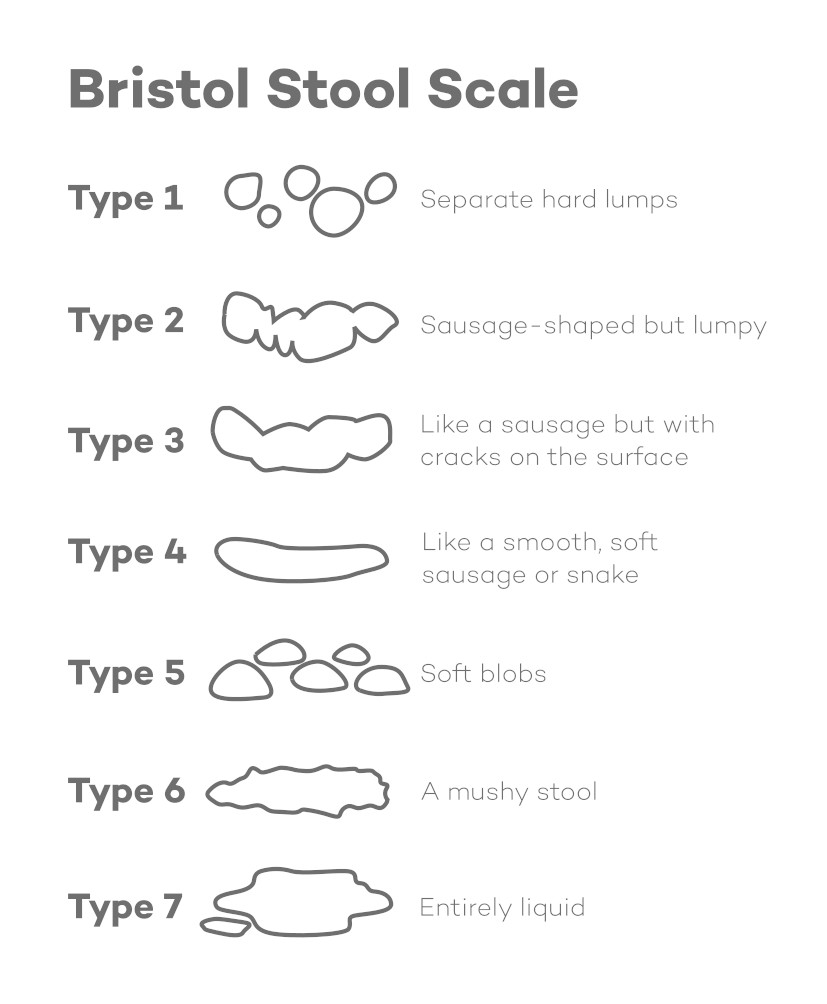
You can do that by using the Bristol stool scale.

What is the Bristol stool scale?

The Bristol stool scale is an easy visual tool to help you keep track of your poo.

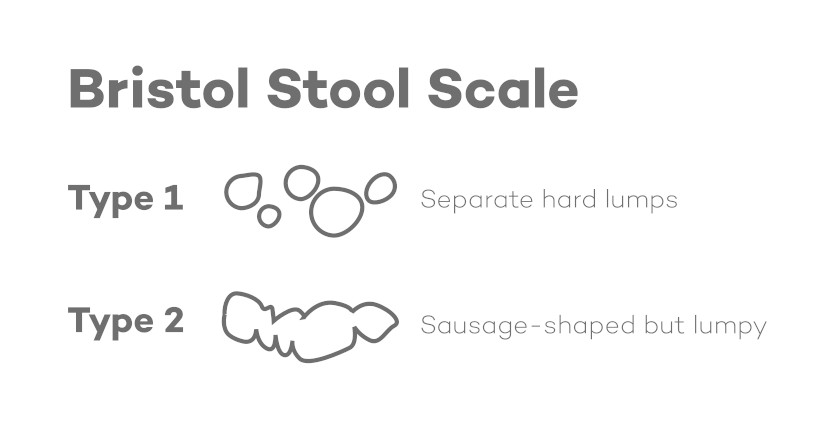
The scale describes seven types of poop: from constipation (Type 1) to diarrhoea (Type 7).

Constipation

Type 1 is pebble poop and it looks like chocolate covered raisins. Usually it’s hard to pass.

Type 2 looks like a lumpy log or sausage. When you look at it, you can see that it’s quite hard and dry.

Constipation can also mean that you’re unable to completely empty your bowels in one go or you’re not passing stools regularly.

Usual/normal

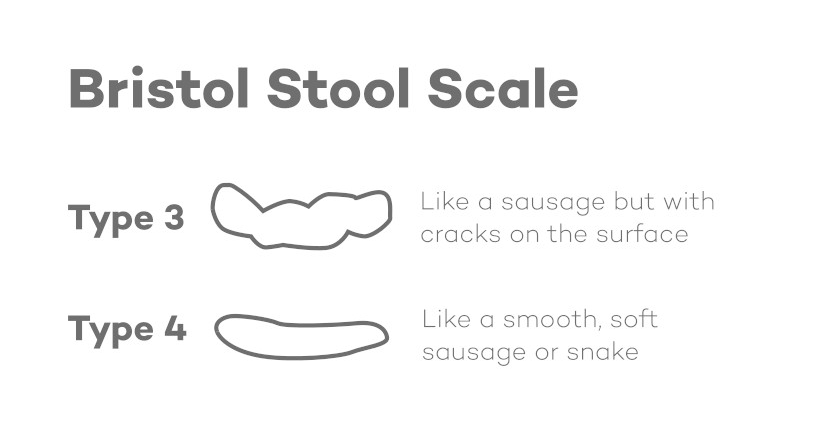
Type 3 looks like a soft sausage but with cracks on the surface. The cracks show that your poop is a bit dry and you should drink more water.

Type 4 resembles toothpaste or a smooth, soft sausage. This is the true poo perfection!

Diarrhoea

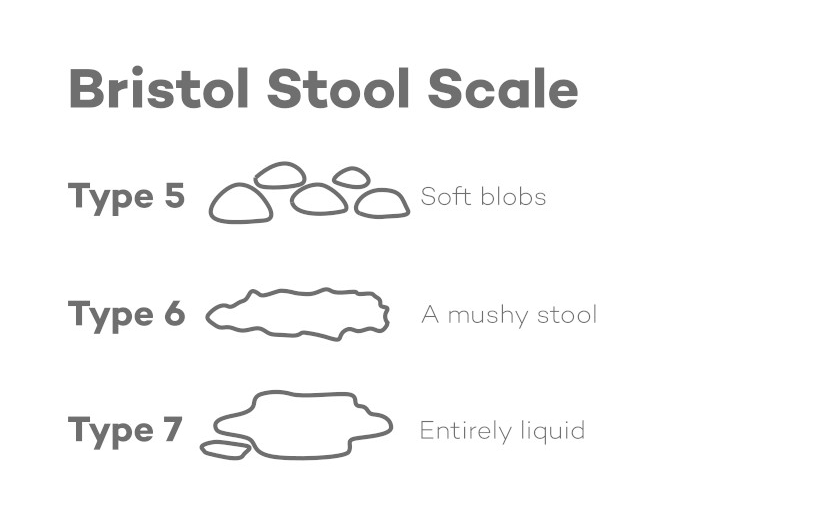
Type 5 poop (soft blobs) is considered normal by some specialists, but others say it implies diarrhoea. Thus, its somewhere between normal and diarrhoea.

Types 6 and 7 definitely mean diarrhoea and you feel urgency to pass your stools.

Type 6 has a mushy consistency, like a thick smoothie.

Type 7 is entirely liquid, like chocolate milk. If this lasts more than three days, see your doctor.

Categories
English

What does healthy poop look like?

Reading Time: 2 minutes

What kind of poop is considered healthy/”normal”?

On the Bristol stool scale the perfect poop is type 3 and type 4.

Type 3: If your faeces resemble a sausage with a slightly cracked surface, it indicates that you have consumed a sufficient amount of fibre, but should perhaps be drinking more water.

Try drinking at least two more glasses of water per day.

Type 4: Stool that looks like a smooth and soft sausage or has a consistency that is similar to that of toothpaste indicates a balanced intake of fibre and water.

Poop perfect! 🙌🩄

What kind of colour is normal?

The colour of a normal stool ranges from light yellow to brown and almost black.

The classic brown colour comes from bile in the stool.

What else should you keep in mind about healthy bowel movement?

Note these four things:

  1. Once you start feeling the need to poo, you should be able to hold it in for a little before having to go to the toilet.
  2. Your poop should be quick and easy to pass, and it shouldn’t take more than a minute.
  3. When you go to the toilet, you should empty your bowel completely so that you do not feel like you need to go again right after.
  4. You should defecate 1–3 times a day to 3 times a week.

How to achieve the perfect poo?

If you feel that your pooping game needs improvement, do these simple things daily and you’ll soon see the joyful results.

  • Keep your body hydrated and drink 8–10 glasses of water per day.
  • Be active: walk 15–30 minutes every day.
  • Learn to manage your stress levels by meditating or doing mindfulness exercises.
  • Eat lots of different plants to get dietary fiber, that helps to normalize bowel movement.
  • Want an extra boost? Try our Feel Good Inside fibre mix to get your bowel movements running like clockwork.
Categories
English

Get your digestion back on track – start at the root cause

Reading Time: 3 minutes

We all experience gut troubles from time to time, and that’s perfectly normal. It can stem from all manner of things, such as a stomach bug, unsuitable foods, overeating (here’s looking at you, Christmas!), or even just excessive stress. 

If indigestion – whether manifested as flatulence, bloating, heartburn, or fatigue after eating – is a constant problem for you, however, that’s a sign of an unhealthy gut. None of these issues should be your daily companion.

To get your digestion back on track, you should start by figuring out the cause of your gut problems.

Why do you need to know what’s causing your indigestion in order to get your gut back to health?

At first, indigestion can seem relatively harmless, but constant and prolonged problems can lead to serious chronic diseases that are significantly more difficult to treat. For this reason, it’s important to track down the root cause right away. 

Your health largely hinges around your gut bacteria, which supply the body with various beneficial compounds. 

Digestive problems are usually the first sign of an imbalance of the community of bacteria inhabiting your gut, or the gut microbiome. If your microbiome is out of balance, that is to say, the proportion between good bacteria and harmful bacteria in your gut is off, your body cannot function in the way that it needs to.

The condition of your microbiome greatly both reflects and affects your overall health. In addition to digestive problems, a disturbed gut microbiome can lead to a situation where you are:

  • not getting sufficient vitamins and minerals from food; 
  • constantly fatigued and lacking energy (which can be a result of your body not receiving enough nutrients from food); 
  • constantly forgetting things; 
  • experiencing frequent drops in mood
  • constantly plagued by colds
  • afflicted by skin problems (rashes, acne); 
  • experiencing sleep disturbances
  • being unable to tolerate certain foods

Your gut is like the control centre for your health

The gut is the place where it is determined which part of the food you’ve eaten is absorbed into the bloodstream and distributed throughout the body. A healthy gut enables the body to absorb the necessary nutrients (e.g., carbohydrates, proteins, fats, vitamins, minerals), while keeping toxins from breaking out of the gut so that they can be excreted from the body. 

If your gut bacterial community is out of balance, however, your gut will become compromised and can start to ‘leak’. This refers to a situation where toxins and other compounds that are harmful to the body are able to pass through the intestinal wall. When this happens, your immune system is activated to destroy the harmful compounds, which results in inflammation in the body. 

In the case of protracted digestive problems, this can lead to the onset of serious inflammatory diseases. Thus it is vital to identify the root cause of your indigestion as early as possible, and to nurse your gut back to health before serious diseases can take hold. 

How to find the root cause to get your digestion back to normal?

For the road back to normal digestive health, it is important to know that every person’s microbiome is as distinct as a fingerprint. No one diet is suitable for everyone. This means that instead of trying to make sense of all of the contradictory recommendations in the media, you should consider, above all, your personal health indicators, your own well-being, and common sense.

In order to get to know the particularities of your microbiome and find out what’s really going on in your gut, you can take a microbiome test. 

Mikrobioomi test Gut Secrets

A microbiome test will give you an in-depth picture of the state of your gut bacteria. It will tell you what is working well and what needs attention. In addition, it will allow you to learn about which foods your little friends down in the gut need most, as well as what kind of lifestyle can help keep them in balance and maintain a healthy gut.  

Knowing what your body needs will fully equip you to take the right steps to get your digestion back on track. 

Learn more about the microbiome test here.

Health starts from the inside! 

💌 Consider also subscribing to Elsavie’s newsletter to receive useful weekly information on how to protect your health.

Categories
English

Let’s talk about poo – what can our stool tell us about our health?

Reading Time: 3 minutes

Author: Katri Merisalu, nutritional therapist at Elsavie

What is poo, or stool, anyway?

Poo, or stool, mainly consists of undigested food, proteins, salts, and other components produced in the intestines.

Why does it matter how often we go to the toilet? 

As a nutritional therapist, I always ask my clients about the frequency of their bowel movements. This may seem like an insignificant health indicator, but it’s actually one of the easiest ways to figure out if you might have health problems.

What should you note about your stool frequency?

  • A ‘healthy’ stool frequency can mean you go to the toilet anywhere between three times a day to three times a week.
  • People are different, and so is the frequency and timing of their bowel movements. Some of us go to the toilet immediately after waking up, while others do so after breakfast, after drinking coffee, or in the middle of the workday.
  • Defecating less than 3 times a week, however, indicates constipation.
  • And if you have to empty your bowels more than 3 times a day, you probably have diarrhoea.
  • In both cases, you should make sure that the situation does not last longer than several days or even weeks. If it does, contact your family physician. Especially if you have severe pains in the lower body or notice blood in your stool.

What affects digestion and stools?

  • Nutrition – the most important thing in nutrition is consuming sufficient fibre and water. Fibre is contained, for example, in whole-grain products, root vegetables, and fruits, which help to increase the mass of your stools, thereby ensuring healthy stools.
  • Exercise – physical activity, such as walking, helps food better transit the digestive system. If you are active, so is your gut!

What does the colour of your stool indicate?

The colour of a normal stool ranges from light yellow to brown and almost black. The classic brown colour comes from bile in the stool.

White or clay grey stools can indicate problems with the liver or pancreas.

Black or reddish stools can indicate gastrointestinal bleeding. If this occurs more than once, contact your doctor immediately.

Note, however, that some foods can also make your stool more colourful. For example, blue colouring in your poo can be caused by eating blueberries, purple by beetroot, orange by pumpkin, or green by large quantities of green vegetables.

Similarly, the colour of your poo can also be affected by food colourings in certain sweets or beverages.

What is the Bristol stool scale?

The Bristol stool scale is a wonderful visual tool for monitoring your digestive health. 

It is used by many nutritionists, doctors, and their clients/patients because it enables you to detect changes in the functioning of the digestive system. And it makes it easier to discuss this uncomfortable subject. 🙂

The Bristol stool scale establishes 7 different types of stool that run the gamut from constipation (type 1) to diarrhoea (type 7).

Bristol stool scale

The perfect poo 🩄 = types 3 and 4 on the Bristol stool scale

Type 3: If your faeces resemble a sausage with a slightly cracked surface, it indicates that you have consumed a sufficient amount of fibre, but should perhaps be drinking more water. Try drinking at least two more glasses of water per day.

Type 4: Stool that looks like a smooth and soft sausage or has a consistency that is similar to that of toothpaste indicates a balanced intake of fibre and water.

In conclusion, both of these types are considered normal and indicative of a good fibre-rich diet, healthy digestion, and good gut health.

What else should you keep in mind about ‘the perfect poo’ and digestion?

Note the following:

  • Your stool should be quick and easy to pass, and the whole affair should not take more than a minute.
  • Once you start feeling the need to poo, you should be able to hold it in for a little before having to head to the toilet.
  • When you go to the toilet, you should empty your bowel completely so that you do not feel like you need to go again right after.
  • Your stool frequency should be regular and you should defecate 1–3 times a day to 3 times a week.

If your bowel could use a boost, try our Feel Good Inside green fibre blend, which is designed to get your bowel movements running like clockwork every day.

Categories
English

What is diarrhoea and how can you relieve it?

Reading Time: 3 minutes

On the Bristol stool scale, diarrhoea corresponds to stools of types 5 to 7.

Type 5: Stools that appear as soft blobs are considered normal by some specialists, while others say they are indicative of diarrhoea. Therefore, they might be viewed as falling somewhere between normal stools and diarrhoea.

Types 6 and 7: These certainly indicate diarrhoea. Type 6 stools have the consistency of watery porridge, while type 7 stools are completely liquid.

What causes diarrhoea?

Diarrhoea can be caused by a number of things, but the important question is whether it is short-term issue or a chronic problem.

Acute, i.e. short-term diarrhoea

Short-term diarrhoea is something we all have probably experienced. It usually passes within a few days.

Acute diarrhoea can be bacterial or viral in nature or caused by a parasitic infection (so-called traveller’s diarrhoea) or something you’ve eaten.

Liquid stools after eating may indicate food poisoning, lactose intolerance, infection, excessive magnesium intake, or simply excessive coffee drinking. Additionally, liquid stools can be caused by spicy or fatty foods.

This kind of diarrhoea is not much of a problem for the body because it passes quickly. Just make sure to drink enough water to replace the lost fluids.

Chronic diarrhoea – a long-term problem

Severe or frequent diarrhoea lasting for weeks or more at a time is a sign of a more serious health problem and definitely needs medical attention.

Such diarrhoea usually results from a bowel disease, food intolerance, or another disorder, such as coeliac disease or Crohn’s disease.

What kind of problems can chronic diarrhoea lead to?

Diarrhoea mainly results in dehydration, as it causes the body to lose a lot of water and salts in a short period of time.

If the lost water and salts are not replenished quickly, the body will start to ‘dehydrate’ – a condition where the body lacks the necessary amount of water and fluids to carry out its normal functions. This can eventually lead to seizures, low blood pressure, kidney failure, and even coma.

The other thing is that food will pass through your digestive system too quickly. Your body will be starved of nutrients because they are not given enough time to be absorbed into the bloodstream.

Note: If you have chronic diarrhoea, you should see your family physician as soon as possible!

How can you relieve diarrhoea?

In the case of chronic or very severe diarrhoea, you should first identify the causes and consult a doctor. Nonetheless, some changes to your diet might also help.

  • The most important thing is to replenish the body’s fluid reserves. This simply means drinking more water or beverages containing electrolytes, such as sports drinks or coconut water.
  • Consume more gel-like water-soluble fibre. This will soothe your digestive system and help prevent irritation. Oat flakes, blueberries, flaxseed, and psyllium are some good sources.
  • Avoid laxative fruits and berries such as apples, plums, strawberries, currants, and water-insoluble wheat and rye bran, which can irritate the gut (but are good for relieving constipation).
  • Our Calm Your Rumbly Tummy red fibre mix can also help make the digestion process smoother and reduce inflammation.
  • If your diarrhoea stems from food intolerances (make sure to do a food intolerance test first!), you should avoid the foods in question or consume them in smaller quantities. The most common culprits behind food intolerances are gluten, lactose, and casein.
Categories
English

What is constipation and how can you relieve it?

Reading Time: 2 minutes

Having constipation can be painful and unpleasant, but luckily there’s much you can do about it!

If your stools resemble type 1 or 2 the most, you are likely to be suffering from constipation.

Your nut-like poo is stubborn 🐐 and doesn’t want to come out. Doing your business feels like proper work because stools are hard to pass and it can be painful.

Constipation can also mean that you’re not passing stools regularly or you’re unable to completely empty your bowel in one go.

What causes constipation?

These all can play their part:

  • you’re not drinking enough water;
  • you’re being inactive;
  • you’re living a stressful life;
  • you’re taking antibiotics;
  • you have an autoimmune disease.

But usually it’s this:

👉 You are not eating enough fiber from plants.

Yes, it really can be this simple!

What is this magical fibre?

It’s a non-digestible carbohydrate found only in plants.

Dietary fiber is essential for increasing the weight and size of your stool and also softens it, making it easier to poop.

Most importantly: dietary fiber is food for your gut bacteria. If they have enough fiber to eat, they are happy and the good bacteria can help to keep your inner balance.

But… if you keep your bacteria in hunger, then usually the good ones start to die out and bad ones are going to cause problems for you (“I’m going to the toilet đŸšœ. Wish me luck!”).

What are the best sources of fibre for relieving constipation?

As said earlier, you ONLY get fiber from plants and when you’re constipated, the best plants to eat are:

🍒 berries (currants, gooseberries);
🍎 fruits (apples, plums);
đŸ„Ź vegetables (cabbage, lettuces);
đŸŒŸ whole-grain products (whole-wheat bread, whole-grain pasta).

How else can you relieve constipation?

  • Eat more those 👆 plants every day to get more dietary fibers and to soften the poo.
  • If you want faster results, try our Feel Good Inside green fibre blend. Remember to start with lower doses and then gradually increase your intake of the blend.
  • Drink 0.5–1 litres (2–4 glasses) more water per day.
  • Be regularly active, because if you’re active, your bowel is active! Even taking just a 15–30 minute walk every day can work wonders.
Categories
English

The journey of food in your gut

Reading Time: 3 minutes

The past decade has shed light on the role of the gut microbiome in human’s overall health. Gut microbiome pertains to the collective bacteria, viruses, and fungi that live in our gut. It has become clear that our health is intertwined with our microbes.

Think of it as a very complex highway system, with traffic going back and forth at high speeds on many different levels, directions and junctions. Our body affects the community living in our gut, and these microbes regulate different functions in our body.

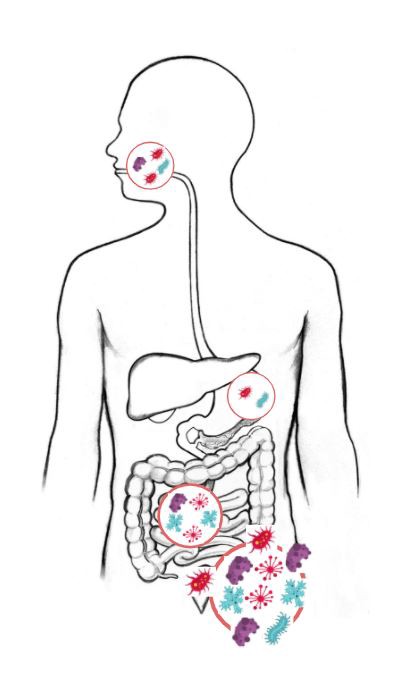
Microbial communities throughout the digestive tract.

Your digestive tract is one of the main contacts of your body to the outside world — all the food that you eat passes through it. Throughout the gastrointestinal tract reside different communities of microbes.

The digestive tract starts from the mouth, which is responsible for grinding the food into smaller chunks. Also the digestion of starch starts in the mouth. Mouth is home for about 20 billion microbes.

Next, food moves through the stomach, which is responsible for partial degradation of proteins. As the stomach is a very acidic environment, there are about 1000 times less microbes than in the mouth.

Then, food moves forward to the small intestine where degradation of macronutrients is finalized. Here the macro- and micronutrients also get absorbed to the bloodstream. The environment here is a lot friendlier than in the stomach, so it is home to about the same amount of microbes that live in the mouth.

However, the digestion is not finished in the small intestine. Food, or what’s left of it, moves forward to the large intestine. This is a perfect environment for microbes to live in. The food moves at a slower pace and it’s full of nutrients for microbes. Although most of the nutrients get absorbed already in the small intestine, there are compounds — the dietary fibers — that our own digestive enzymes are not able to degrade.

Fibers make their way to the end part of the large intestine — called colon. Here resides about 10 thousand more microbes than in the mouth and small intestine and more than million times more microbes than in the stomach. This is found to be the most densely and diversely inhabited part of the human body and most likely the highest microbial density recorded in any habitat on the Earth.

The microbes, living in our gut, compensate for what our own digestive enzymes cannot degrade. They help to increase the availability of energy from food. Without microbes we would get about 10–15% less energy from our diet.

But it’s not only energy. While degrading the fibers, gut microbes produce different molecules called metabolites that regulate essential functions in our body. For example, these metabolites strengthen the gut barrier â€” the only defence wall that prevents pathogenic microbes, toxins and other potentially harmful particles from entering the bloodstream and getting access inside our organism.

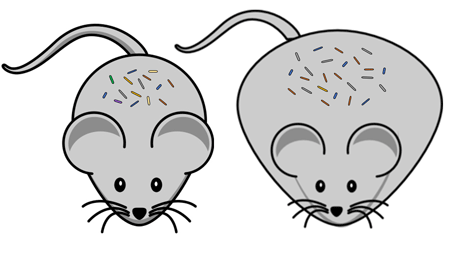
In addition, gut microbes produce vitamin K and group B vitamins, as well as modulate metabolism. It has been found that the gut microbiome composition differs between lean and obese individuals. This is well illustrated in studies conducted with mice who have been raised in completely sterile conditions so that they lack microbes. When transferring the gut microbiome of lean or obese human to such mice, then the mice quickly adopt the metabolic state similar to humans. Those getting the microbes from lean individual stay lean and those getting the microbes from obese person become obese.

Doesn’t it seem simple, that we could just get the microbes from lean people and become lean ourselves? Well, I’m afraid, I have to disappoint you. Yes, we could get a great push towards, but the food we eat influences who stays alive and permanently inhabits our gut.

Studies have shown that diet can make some shifts in the gut microbiome as quickly as 24 hours. However, to make a lasting change, you must eat a healthy diet consistently.

So, the communication between our gut microbes and digestion is two-way, as the gut microbes affect how our metabolism works and the food we eat affects the composition of that community living in the gut.

Categories
English

Why is diversity the key to a healthy gut?

Reading Time: 3 minutes

Not long ago we used to think that a good bacteria is a dead bacteria. We’ve been scared of the microbes and tried to build up a safe sterile environment around us. However this is not exactly what nature has intended.

During the past decade it has become clear that we live in symbiosis with the microbes living on and inside us — our microbiome.

Already during birth we are coated with microbes. This is the seed to the formation of our very own microbiome. And our microbiome is one of the fundamental building blocks of our immune system.

About 80% of our immune system resides in the lining of your gut, and the microbiome is in constant contact with it. A healthy, resilient gut microbiome relies on high richness and biodiversity.

Richness is the total number of different bacterial species in your microbiome

Diversity is the amount of individual bacteria from each of the bacterial species present in your microbiome.

Let’s compare these two concepts in a group of 30 people with different professions. Richness would be the sum of all the different professions we have — e.g teacher, doctor, scientist, police and lawyer. Diversity on the other hand shows how many of these different occupations we have — let’s say 2 teachers, 1 doctor, 5 scientists, 2 police officers and 20 lawyers.

Well in this group of people, the richness can be high, but the diversity surely is not, as the vast majority of people are lawyers. And in case of some accident, we do have 1 doctor, but this could prove to be not enough.

A rich and diverse microbial community is much more capable and resilient. All of the different species carry about 2–20 million genes necessary for producing metabolites — small compounds that all regulate different functions in our body. Some of these compounds are responsible for vitamin production, some for digesting the food or communicating with the brain, immune system or responsible for other crucial functions in our body. The larger pool of these compounds we have, the better we are equipped to face different situations.

Secondly, a diverse community is more stable because it prevents the overgrowth of harmful pathogenic bacteria. Let’s imagine that instead of these 20 lawyers we have 20 burglars. It would be very difficult for our 2 policemen to fight against all of the burglars. And when we think of the microbes, they reproduce very quickly meaning that instead of 20 burglars we’ll soon have 40 of them, against maybe 3 or 4 policemen.

Scientists have found that low microbiome diversity can lead to various chronic illnesses â€” digestion problems, bowel disease like IBD, metabolic diseases like obesity and type II diabetes, neurological disorders like anxiety, depression, Parkinson’s disease, heart or kidney disease and many other illnesses.

As David Attenborough says in his latest movie â€œBiodiversity is the key to balanced nature. And species can only thrive if everything else around it is thriving.” This is also perfectly true for our microbiome. A healthy microbiome is a diverse community of microbes and this can be achieved only by enabling our microbes a good environment to live in.

. . .

In upcoming stories we’re going to write more about how we can build up a healthy environment for our microbes. So, stay tuned to learn more about the importance of gut health and balanced microbiota.

We’re always waiting for your feedback. Let us know of your thoughts and questions. If you enjoyed reading this, make sure to click the “follow” button and check out our webpage www.elsavie.com

. . .

Sources and interesting reading: